
 (excl. BMX)
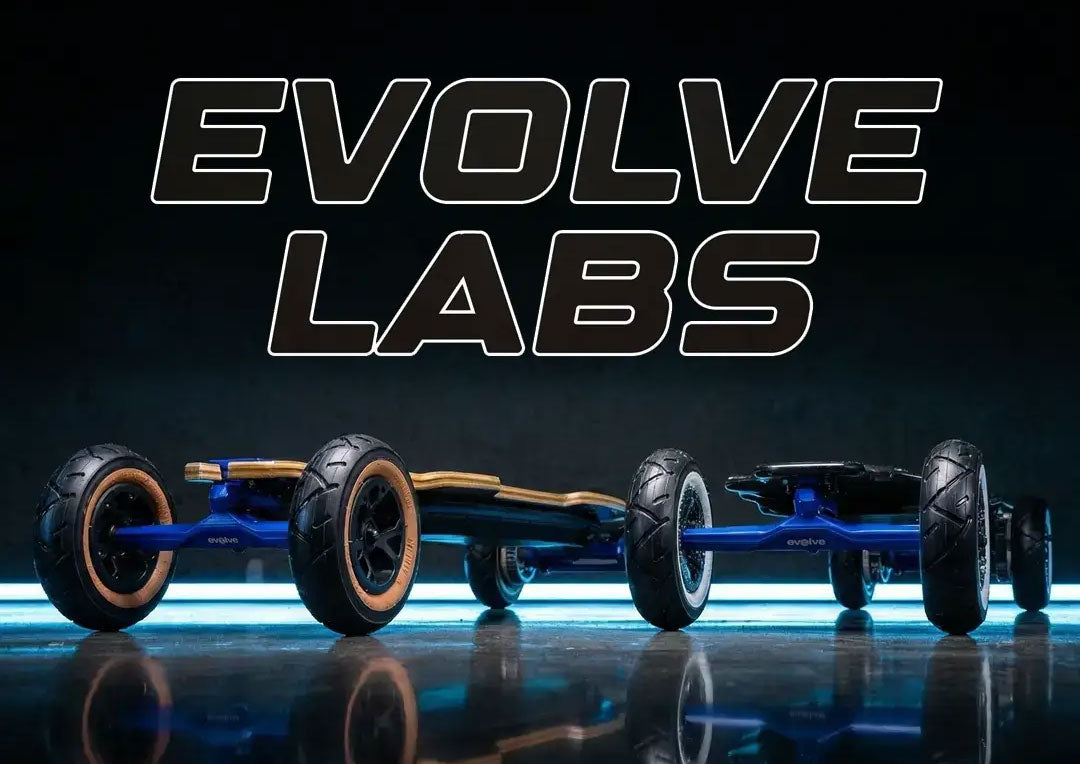
Why electric skateboards use remotes instead of foot control

Why electric skateboards use remotes instead of foot control
Electric skateboards use hand-held remotes because they give the rider precise, independent control over acceleration and braking without requiring any change in foot position or body weight. That separation of control from stance is what makes riding feel natural, safe and genuinely expressive.
It is a question worth asking, especially if you are coming from a traditional skateboard background. On a regular board, your body does everything. So why introduce a remote at all?
The case for keeping your feet free
On an electric skateboard, your feet are already doing a lot of work. They manage weight distribution through corners, absorb road feedback through the deck and shift fore and aft as terrain changes. Adding throttle and braking to that workload, through heel pressure sensors or weight-shift detection, creates a feedback loop that is difficult to make reliable.
Weight-shift systems have been tried. The problem is that the board cannot always distinguish between you leaning into a carve and you wanting to accelerate. At 40 km/h on a coastal path in Brisbane or along Sydney's foreshore, an unintended surge or brake can end badly. A hand-held trigger removes that ambiguity entirely.
Your thumb pulls back and the board accelerates. You ease off and it coasts. You push forward and it brakes. That clarity is not a limitation of the technology. It is a deliberate design decision.
Precision matters more at speed
The faster a board goes, the smaller the margin for error. Most Evolve boards are governed to 50 km/h in production configuration. At that speed, the difference between smooth deceleration and a wheel lock is a matter of how much braking force is applied and how progressively it builds.
A good remote lets you modulate that force with fine motor control through your fingers, not your entire body. When you are navigating traffic near Melbourne's Yarra River trail or dropping down a hill in Perth, that kind of granular control is not optional.
The Phaze Remote was designed with this in mind. It uses a dual trigger layout, one for throttle and one for braking, in a CNC aluminium-reinforced body that sits naturally in the hand. The result is a tool you can operate without thinking, which means your attention stays on the ride.
How the Phaze Remote works with the board
The Phaze Remote Bluetooth communicates with compatible Evolve boards including the Diablo, Fusion, Stoke X, Renegade and GTR Series 1 and 2. It connects via Bluetooth and displays live ride data on a small LCD screen, including speed, battery level and riding mode.
Riding modes, ECO, SPORT, CORSA and custom settings via the Explore app, are cycled directly through the remote. You do not need to stop, pull out a phone or adjust anything on the board itself. Mode changes happen on the fly, which is useful when conditions shift mid-ride, like moving from open road near the Gold Coast to a busier shared path.
The dual trigger design keeps braking and acceleration on separate inputs, which prevents accidental activation. Both triggers are within reach of the thumb and index finger without repositioning your grip. After a short adjustment period, most riders report the remote becoming instinctive.
Connectivity and safety considerations
A remote that loses signal mid-ride is dangerous. Evolve's EFOC 2.0 motor controller is built to handle signal interruption safely. If the remote disconnects, the board defaults to a controlled coast rather than an abrupt stop or uncontrolled acceleration. That behaviour is consistent across the Diablo, Fusion and Stoke X boards that use the Phaze system.
The remote also uses a wrist leash, included in the box, so if you step off unexpectedly the board decelerates rather than continuing without input. Small details, but they reflect how seriously the remote-board relationship is engineered.
Why not an app instead?
Phone-based control exists in some lower-end boards. The problem is latency. A phone operating through a Bluetooth connection adds processing overhead that creates a delay between input and response. At low speeds that delay is manageable. Once you are above 25 km/h it introduces enough lag to make braking feel unpredictable.
A dedicated remote communicates directly with the motor controller. The signal path is shorter, the hardware is purpose-built and the response is immediate. That is why purpose-designed remotes remain the standard in performance electric skateboarding, and why Evolve has continued refining the Phaze rather than shifting to app-only control.
The Explore app still plays a role. It handles ride tracking, diagnostics, custom mode tuning and over-the-air firmware updates. That is where fine-tuning happens. The remote is where riding happens.
The upgrade path
If you are running an older GTR Series 1 or Series 2 board, the Phaze Bluetooth remote is a compatible upgrade over the R2 remote. The ergonomics are improved, the LCD gives you more live data and the build quality is noticeably higher. Riders in Brisbane and Melbourne who do regular commutes report the trigger feel alone justifying the switch.
It is also worth noting that the Phaze WiFi version is specific to older GT and GTX boards. If you have a GTR or any current-generation board, the Bluetooth version is the right one.
For anyone picking up a new Fusion, Diablo or Stoke X, the Phaze Bluetooth remote ships in the box. There is nothing to source separately.
People also ask
Can you ride an electric skateboard without a remote?
Some electric skateboards support a free-roll mode that allows unpowered riding, but you cannot control acceleration or braking without the remote connected. Riding without one is not recommended at speed.
What happens if the remote signal drops?
On Evolve boards using EFOC 2.0, a signal drop causes the board to coast safely rather than brake hard or accelerate. The wrist leash also ensures the remote stays tethered to the rider.
Is the Phaze remote compatible with all Evolve boards?
The Phaze Bluetooth remote is compatible with the Diablo, Fusion, Stoke X, Renegade Diablo and GTR Series 1 and 2. The Phaze WiFi version is for GT and GTX boards only.
How long does the Phaze remote battery last?
The remote charges via USB-C and holds charge well across multiple sessions. Exact battery life will vary depending on usage, but most riders charge it alongside their board after longer rides.
Can I use my phone instead of the remote?
The Explore app is for tuning and diagnostics, not live throttle control. A dedicated remote is required to ride. Phone-based throttle control introduces too much latency for safe use at speed.
Watching it in action
If you want to see how the Phaze remote integrates with the riding experience in practice, the video below covers it well.
-
Posted in
electric skateboard, evolve
