
 (excl. BMX)
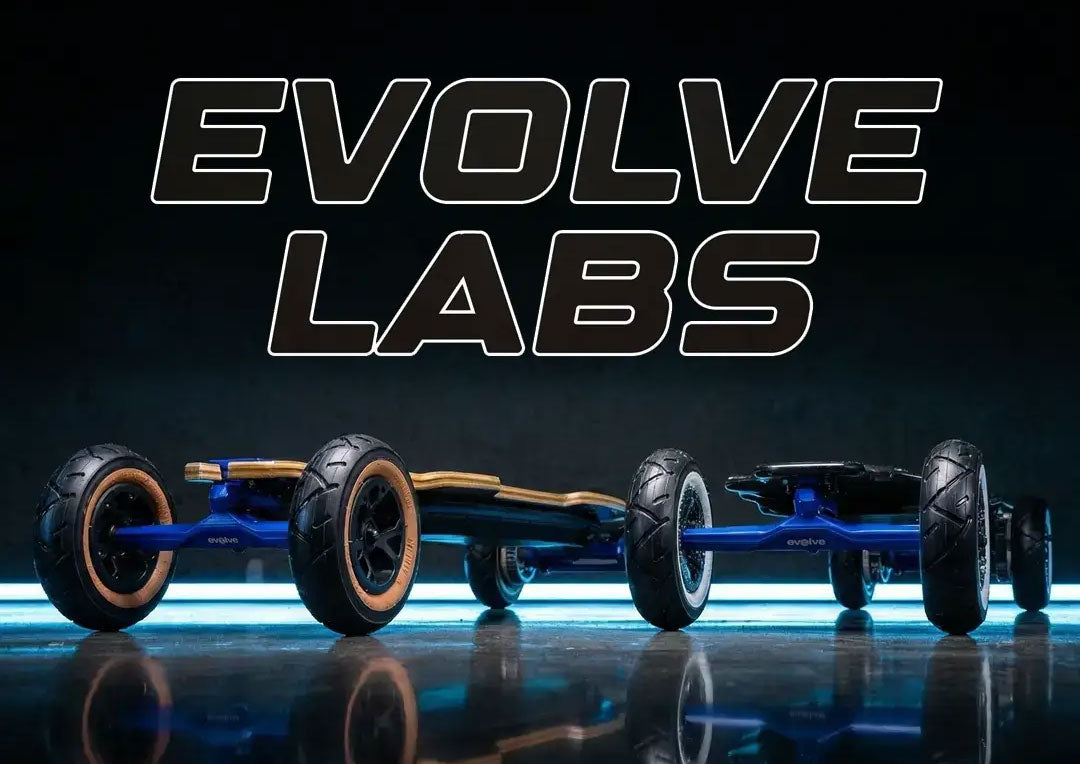
What electric skateboard range do you really need?

What electric skateboard range do you actually need?
Most riders overestimate how much range they need and underestimate how much riding style affects it. Before you spend extra chasing a bigger battery, it is worth understanding what range numbers actually mean in practice and what distance genuinely suits the way you ride.
The gap between advertised range and real-world range
Every electric skateboard manufacturer publishes a maximum range figure. That number is typically achieved under optimal conditions: a lighter rider, flat ground, eco mode, moderate speed and consistent throttle. Real-world riding rarely looks like that.
Hills, headwinds, heavier body weight, aggressive acceleration and riding in sport or corsa mode all reduce range. A board rated at 60 km might deliver 35 to 45 km for an average rider covering mixed terrain at a comfortable pace. That is still excellent, but it is the number worth planning around.
When comparing boards, always think in terms of real-world range rather than peak figures. Ask yourself what the board will likely deliver on your usual route, not on a perfect day.
How far do most people actually ride?
The majority of electric skateboard sessions fall into three categories:
- Short commutes and last-mile trips: typically 5 to 15 km each way
- Recreational rides and group sessions: usually 20 to 40 km total
- Long-distance touring or all-day rides: 50 km and above
If you are commuting in Brisbane or Perth on flat, sealed roads, a board with 30 to 40 km of real-world range covers most daily use comfortably. If you are doing longer weekend rides through Sydney's northern suburbs or tackling the hills around Melbourne's inner east, more capacity gives you confidence without watching the battery percentage the whole time.
The riders who genuinely need 60 to 80 km are typically doing long coastal rides, touring between suburbs or running back-to-back sessions without access to a charger. For most people, that is a nice-to-have rather than a necessity.
Range anxiety is real, but it is manageable
Range anxiety, the nagging worry about running flat before you get home, is one of the most common concerns for new riders. The fix is not always a bigger battery. A few habits remove most of that stress:
- Ride in eco mode for the first half of a long trip, switch to sport for the return
- Know your route and its elevation profile before you leave
- Keep the board charged after each ride rather than running it down repeatedly
- Use the Evolve Explore app to track actual consumption on your usual routes
Once you have a few rides logged, you develop a reliable sense of what the board actually uses in your environment. That confidence replaces the anxiety more effectively than extra battery capacity does.
Terrain changes the equation significantly
Street wheels and all-terrain tyres deliver very different range numbers on the same board. Pneumatic all-terrain tyres create more rolling resistance and draw more current from the motors, which reduces range. On sealed surfaces, street wheels are faster and more efficient. On rough ground, grass or gravel, all-terrain tyres make the ride possible and far more comfortable, even if the range drops.
This is why a 2-in-1 setup makes practical sense for riders who do not want to choose between configurations. You ride street wheels for commuting or long smooth rides, then swap to all-terrain tyres for weekend trail sessions or mixed surfaces. You are optimising for the actual ride rather than compromising on everything.
The Fusion 2-in-1 as a practical range answer
For riders who want genuine flexibility without moving into flagship pricing, the Fusion 2-in-1 is the most versatile option in the current Evolve lineup.
The 648Wh Samsung 50S battery delivers up to 60 km on street wheels, which covers most commutes, recreational sessions and longer rides with capacity to spare. On all-terrain tyres, that drops to around 40 km, still more than enough for a solid off-road session. The board ships with both wheel sets included, so you are not paying extra for the conversion kit later.
At 12.5 kg, it is noticeably lighter than the Diablo series, which matters when you are carrying it up stairs or onto public transport. The dual 3000W motors handle 35 per cent gradients, which covers the kinds of hills you encounter across Sydney's Inner West, Melbourne's Fitzroy or Brisbane's western suburbs without any hesitation.
The SuperCarve 2.0 trucks and bamboo deck give it a carvy, surf-style feel underfoot. It is not a rigid race platform, it is a board that encourages you to actually enjoy the ride rather than just cover distance.
Matching range to rider type
A useful way to think about range requirements:
- Campus and last-mile riders: 20 to 30 km real-world range is plenty. The Stoke X covers this well.
- Daily commuters riding 10 to 25 km each way: 40 to 50 km real-world range gives a comfortable buffer. The Fusion or GTR Bamboo both work here.
- Weekend adventurers and mixed-terrain riders: 40 to 60 km with the ability to swap between street and all-terrain. The Fusion 2-in-1 is built for this.
- Performance riders and longer tourers: 60 to 80 km on street, strong hill capability. The Diablo series is the answer here.
If you are unsure which category you fall into, consider your longest likely ride and add 30 per cent as a buffer for hills, wind and mode changes. That figure tells you the real-world range you need, not the headline spec.
A note on charging access
Range planning also depends on whether you can charge at your destination. If you commute to an office, a university or anywhere with a power point, a shorter-range board becomes far more practical. You are effectively doubling your range by topping up during the day. The Fusion's 4-hour charge time fits comfortably within a standard work or study day.
If you ride in areas without easy charging access, or if you do long point-to-point routes on the Gold Coast foreshore or Perth's coastal paths, a larger battery provides genuine peace of mind. But for most urban riders, charging access is often the overlooked variable that makes a mid-range battery perfectly sufficient.
The honest answer
Most riders need less range than they think, but benefit more from flexibility than they expect. A board that does 60 km on street and 40 km on all-terrain, with the ability to switch between both, covers almost every scenario without requiring you to buy two separate setups.
If you can ride it from Mermaid Waters through to Surfers Paradise and back on a weekend, then switch wheels and take it down a dirt trail the following morning, that is not a range problem. That is a board doing its job well.
If you want to ride in both worlds without compromise, the Fusion 2-in-1 is the practical choice.
-
Posted in
electric skateboard, evolve
