
 (excl. BMX)
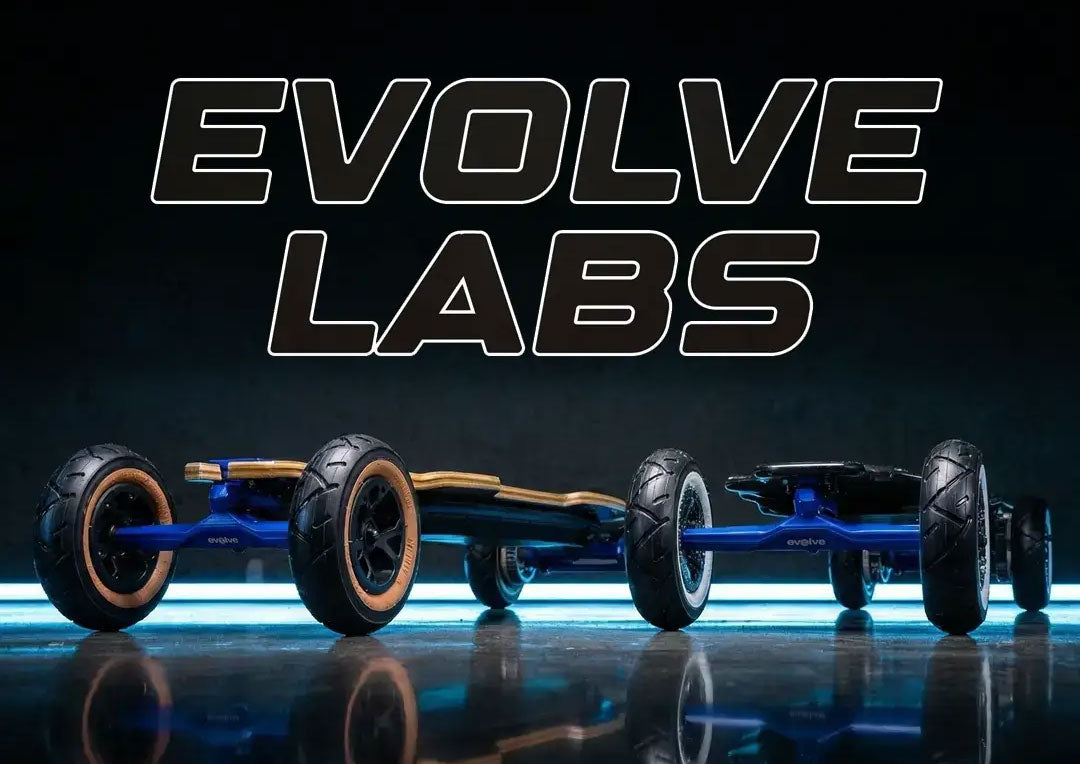
Diablo Bamboo AT vs Diablo Carbon AT: which should you choose?

Diablo Bamboo AT vs Diablo Carbon AT: which one is right for you?
Both boards share the same motors, battery and drivetrain. The difference comes down to the deck, and that single choice shapes how the board feels under your feet at every speed and on every surface. If you want the short answer: choose the Diablo Carbon All Terrain if you prioritise stability, high-speed confidence and lighter weight. Choose the Bamboo if you want a more forgiving, surfy feel underfoot.
Here is a closer look at what actually separates them and how to decide.
What they share
Before getting into the differences, it helps to understand just how similar these two boards are. Both run dual 6374 motors rated at 3,500W each, totalling 7,000W. Both carry the same 864Wh Samsung 50S battery with up to 50 km of real-world range on all terrain tyres. Both hit 50 km/h, climb gradients above 45% and support a 120 kg rider capacity. Both use SuperCarve 2 trucks, the Phaze remote and the EFOC 2.0 controller.
The drivetrain, the electronics and the riding modes are identical. You are not trading performance when you choose one over the other. You are choosing a ride character.
The deck difference and why it matters
The Bamboo deck is three plies of bamboo with two plies of fibreglass. It has natural flex. When you carve, the deck moves with you in a way that feels closer to a traditional longboard or a surfboard on a small wave. That flex absorbs some of the vibration from rough ground, which makes longer sessions more comfortable and the ride feel more intuitive at moderate speeds.
The Carbon deck is forged carbon fibre with an integrated CNC heatsink. It is completely rigid. There is no give at all, and that changes everything about how the board handles above 40 km/h. On rough trails, rocky paths or high-speed gravel runs, the rigidity translates directly into predictability. You know exactly what the board is doing because there is no flex introducing movement between your feet and the trucks.
It also weighs less. The Carbon AT comes in at 14.35 kg compared to 15.3 kg for the Bamboo AT. That is just under a kilogram, which you will notice when carrying it up stairs, loading it into a car or picking it up after a run.
Which feels better to ride
This is genuinely subjective, but there are patterns worth noting.
Riders who come from a longboarding or surfskate background tend to connect with the Bamboo. The flex creates a rhythm in the carve that feels organic. At 30 to 40 km/h on a smooth path, it is hard to beat that sensation.
Riders who push speeds harder, ride heavier or want maximum confidence on technical terrain consistently prefer the Carbon. At 45 to 50 km/h on an all terrain tyre, flex becomes less of a feature and more of a variable you have to manage. The Carbon removes that variable entirely. Heavier riders also benefit because the rigid platform does not compress under load, which keeps the geometry consistent and the braking more precise.
The Carbon also has integrated under-body and logo LEDs with smart brake lights, which is a small but useful addition if you ride in low-light conditions around bike paths or trail heads.
Terrain and where you ride
Both handle the same terrain. All terrain tyres, same motors, same hill capability. The surface itself does not dictate which deck you need.
That said, local riding environments do nudge the decision slightly. Brisbane's riverside trails and Gold Coast hinterland tracks tend to be longer, smoother packed-dirt runs where either board works well. Sydney's mixed terrain, with steeper gradients and more technical off-road sections in areas like Manly Dam or the Blue Mountains trails, is where the Carbon's stability edge becomes noticeable. Melbourne's flat paths and Perth's long coastal stretches suit the Bamboo's relaxed carving feel at a comfortable cruise pace.
If your rides are mostly flat, moderate-speed loops on dirt paths and green spaces, the Bamboo is genuinely the more enjoyable tool. If your sessions include steep descents, fast fire roads or you simply push the board to its upper limits regularly, the Carbon is the better fit.
Price and what you get for the difference
The Bamboo AT is priced at $2,899 AUD. The Carbon AT is $3,199 AUD, a $300 difference. Given that the only change is the deck, that gap reflects the cost of the forged carbon construction and the additional lighting integration.
Whether that is worth it depends on how you ride. For most recreational riders, the Bamboo is excellent value and nothing about the Carbon will feel necessary. For riders who want the absolute best handling at speed, or who are over 90 kg and want the deck to behave consistently under load, the Carbon justifies the premium quickly.
Both boards are available with a 14-day money-back guarantee and a 12-month warranty.
A quick way to decide
- You ride fast, push top speeds or weigh over 90 kg: Carbon
- You want a surfy, flowing carve and mostly ride at moderate pace: Bamboo
- You do long sessions and want a lighter board to carry: Carbon
- You are upgrading from a traditional longboard: Bamboo
- You ride technical descents or steep trails: Carbon
Frequently asked questions
Is the Diablo Carbon AT faster than the Bamboo AT?
No. Both have the same top speed of 50 km/h and identical motors. The Carbon feels more stable at that speed, but the speed ceiling is the same.
Does the carbon deck make the ride harsher?
On all terrain tyres, the pneumatic rubber absorbs most surface vibration before it reaches your feet. The ride quality difference between bamboo and carbon is less pronounced on AT wheels than it would be on street wheels.
Can heavier riders use the Bamboo AT?
Yes, the Bamboo AT is rated to 120 kg. At the upper end of that range, the Carbon is the better choice because the rigid deck keeps geometry and braking behaviour consistent regardless of rider weight.
Where can I see or test these boards in person?
Evolve's Australian store is located at Mermaid Waters, QLD. The team there can walk you through both options and help you choose based on your riding style and local terrain.
Can I add bindings to either board?
Bindings are compatible with the Renegade Diablo, not the Diablo Bamboo or Carbon. If binding compatibility is a priority, the Renegade is the purpose-built option.
The bottom line
If you want the most capable all terrain board in the Diablo range, the Carbon AT is the stronger choice. The rigid deck, lighter weight and integrated lighting make it the better platform for fast riding, heavier riders and technical terrain. The Bamboo AT is not a lesser board, it is a different one, built for riders who value flex and carve feel over outright stability. Both are excellent. The right answer depends entirely on how you ride.
-
Posted in
electric skateboard, evolve
