
 (excl. BMX)
Watt-hours explained: how to read battery specs

Watt-hours explained: what battery specs actually tell you before you buy
Battery capacity numbers get thrown around a lot in the electric skateboard world, but most buying guides treat them like a simple bigger-is-better equation. It is not quite that straightforward. A board with a larger watt-hour figure will not automatically outperform one with fewer watt-hours if the motors, terrain and riding style all pull in a different direction. Understanding what the number actually means changes how you compare boards and, more importantly, how you avoid paying for capacity you will never use or buying a setup that falls short of what you need.
What a watt-hour actually measures
A watt-hour is a unit of energy, not power. It tells you how much total energy the battery can store, not how fast it can deliver that energy. Think of it like the size of a fuel tank rather than the size of the engine.
The formula is straightforward: multiply the voltage by the amp-hour rating and you get the watt-hours. A 43.2V battery with a 20Ah rating gives you 864Wh. That is the full energy reserve available before the battery is depleted. What matters next is how quickly the board draws from that reserve, and that depends on your speed, the terrain, your weight and how aggressively you ride.
This is why two boards with identical watt-hour ratings can deliver very different real-world ranges. A lighter board on sealed flat ground in eco mode barely touches the battery. The same board on a hill trail at full throttle drains it significantly faster. The watt-hour figure sets the ceiling. Your riding style and conditions determine where you actually land beneath it.
Why cell quality changes everything
Not all watt-hours are equal, and this is where most spec comparisons miss something important. A battery built with premium cells holds its voltage under load far more consistently than one built with cheaper cells of the same nominal capacity. Voltage sag, where the battery voltage drops when the motors draw heavy current, is the reason boards can feel sluggish toward the end of a ride even if there is charge remaining.
Samsung 50S cells are regarded as some of the most capable cells available in consumer electric vehicles. They deliver stable voltage under sustained load, which means the board maintains consistent torque and braking feel throughout the ride rather than progressively losing responsiveness. When you see Samsung 50S in the spec sheet, it is not just a brand name. It is a meaningful indicator of how the board will actually perform in the last third of the battery.
Reading the full picture: voltage, amp-hours and what they mean together
Watt-hours alone do not tell you how the board rides. Voltage and amp-hours interact to shape two different things. Higher voltage generally supports higher top speeds and more efficient power delivery to the motors. Higher amp-hours extend duration. A board with a high-voltage, moderate amp-hour setup behaves differently from one with lower voltage and high amp-hours, even if the total watt-hour figure comes out similar.
For all-terrain riding specifically, this relationship becomes important. AT tyres create more rolling resistance than street wheels, which means the motors are working harder for equivalent speeds. The battery discharges faster under that load. A larger, high-voltage battery with premium cells handles that sustained demand more gracefully than a smaller pack would, maintaining consistent power rather than tapering off as the session progresses.
Where the Diablo Carbon All Terrain sits in this context
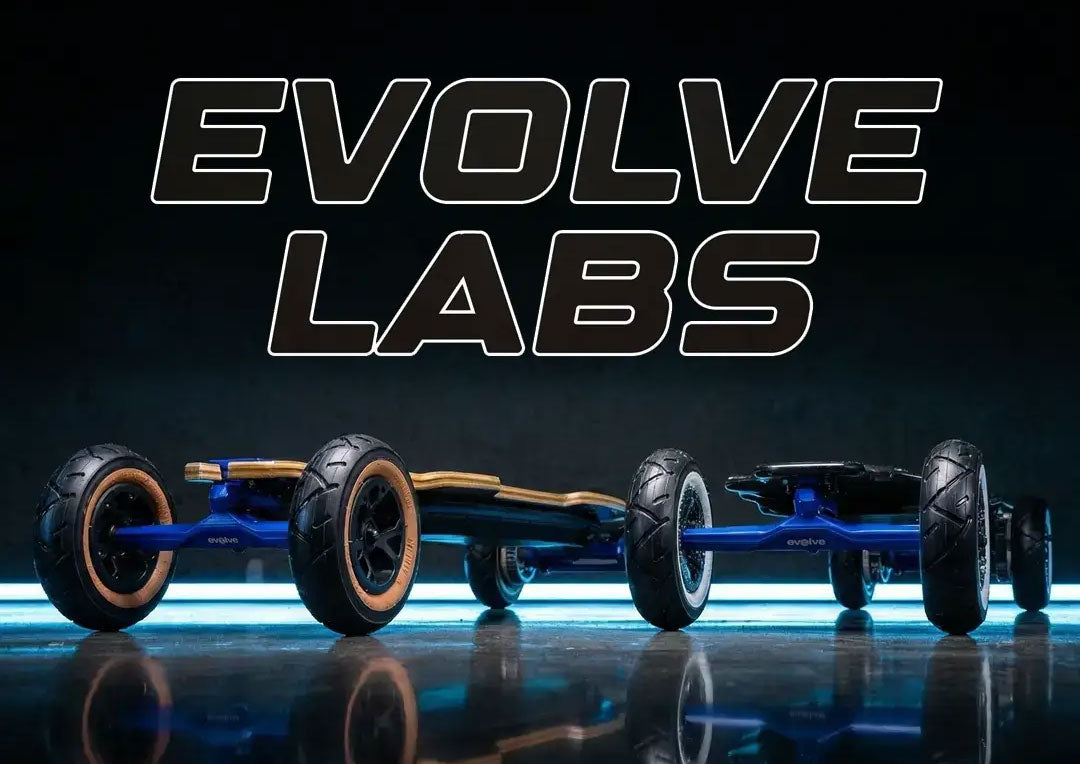
The Diablo Carbon All Terrain is built around an 864Wh, 43.2V battery using 20Ah Samsung 50S cells. On all-terrain tyres, it delivers up to 50 km of real-world range. That figure is measured under realistic conditions, not a controlled lab scenario, and it reflects what the 864Wh pack actually delivers when paired with dual 3500W motors pulling through 175mm pneumatic tyres on mixed surfaces.
What that means in practice is a board that does not require you to ration your ride. A trail run outside Brisbane, a coastal path session on the Gold Coast or a longer mixed-terrain route through the hills south of Melbourne all fit comfortably within that range without range anxiety becoming a background concern. The battery holds voltage consistently enough that the motors deliver the same feel at 40 km as they do at 5 km, which matters when you are navigating technical terrain and need predictable braking and acceleration response.
The carbon deck contributes here in a way that is easy to overlook. It is rigid rather than flexy, and it includes a CNC-machined heatsink integrated into the deck itself. On long all-terrain runs, motor and controller heat is a real factor. The heatsink manages that thermal load more effectively than a standard enclosure does, which means the board sustains peak performance through extended sessions rather than throttling output to protect components.
How much capacity do you actually need
This is the question the watt-hour spec cannot answer on its own. The honest answer depends on where you ride, how you ride and whether you have charging access mid-trip.
If your sessions are under 20 km and you charge at home after every ride, a smaller battery is genuinely sufficient for daily use. If you are doing longer weekend rides in Perth along the river foreshore or exploring the trails around Sydney's outer suburbs, the extra capacity becomes meaningful because it removes the planning burden. You stop thinking about the battery and start thinking about the ride.
The case for a larger battery is strongest when two conditions exist together: terrain that draws more power (hills, loose surfaces, consistent acceleration) and sessions long enough that a smaller pack would leave you within range anxiety territory. All-terrain riding in almost any Australian context, where you are dealing with elevation change, varied surfaces and often warm temperatures that affect cell performance, ticks both of those boxes.
864Wh is not a number you will outgrow quickly. For most riders doing serious all-terrain sessions, it is the range ceiling that eliminates the battery as a variable. That freedom to just ride without calculating return distance is underestimated until you have experienced the alternative.
One thing to check that most people skip
When you are comparing boards on battery specs, always check the charge time alongside the watt-hour figure. A larger battery that takes eight or nine hours to charge is a different proposition to one that tops up in four hours. The Diablo Carbon All Terrain's 864Wh pack charges in four hours with the included 5A fast charger. For a day-rider who tops up overnight, that matters very little. For someone doing back-to-back sessions or riding to a destination and waiting for a charge, four hours versus eight hours is a significant difference in how usable the board actually is.
Watt-hours tell you the potential. Charge time tells you how quickly you recover it. Both numbers belong in the comparison.
The Diablo Carbon All Terrain weighs 14.35 kg with the AT wheels fitted, which is manageable for a board of this capability. The 120 kg maximum load rating means it accommodates a wider range of riders without compromising performance or handling, and the 45 per cent hill gradient rating means Brisbane's steeper suburban streets or the terrain around Melbourne's Dandenong Ranges are well within its capability rather than at the edge of it.
If you are at the point where battery specs are the thing holding up your decision, the Diablo Carbon All Terrain is worth a look in person. The Evolve store in Mermaid Waters, QLD, carries the current lineup and the team there can walk you through what those numbers look like in actual riding conditions. Sometimes the spec sheet makes more sense once you have held the board.
-
Posted in
electric skateboard, evolve
