
 (excl. BMX)
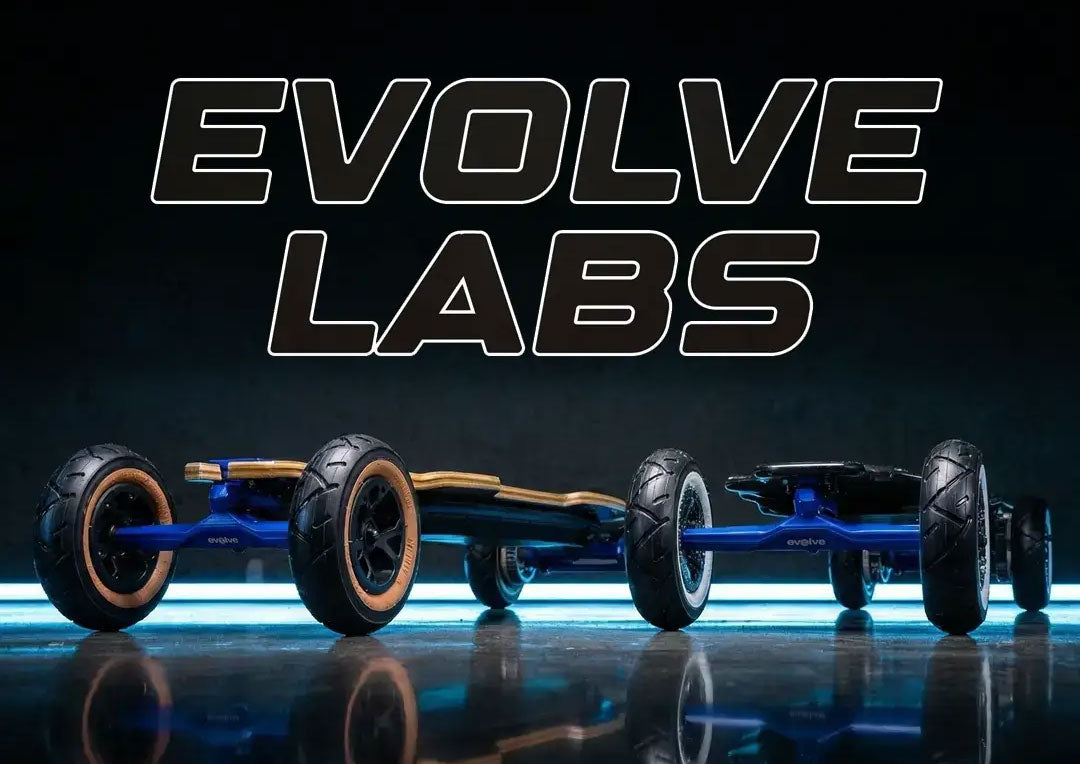
What people get wrong about electric skateboarding
What people get wrong about electric skateboarding
Ask someone who has never ridden one what an electric skateboard is like and you will usually get one of two answers. Either it sounds like a toy for teenagers doing tricks in a car park, or it sounds like a device that will send you into oncoming traffic the moment you touch the throttle. Neither is close to the reality, and the gap between perception and experience is probably the single biggest reason people hesitate before buying one.
The truth is more mundane and more interesting at the same time. Electric skateboards are transport. They are also a genuine hobby, a fitness habit for some riders, and for a growing number of people in Sydney, Melbourne and Brisbane, a replacement for short car trips. But the misunderstandings around them are persistent, and they tend to fall into a handful of predictable categories.
People assume range numbers mean what they say
Every electric skateboard is sold with a headline range figure, and almost every rider ends up disappointed by it at some point, not because the number was false, but because it was never meant to describe their commute. Range figures are typically produced in close to ideal conditions: a lighter rider, flat ground, eco mode, no wind, no stopping and starting at traffic lights.
Real riding looks nothing like that. Hills reduce range noticeably, aggressive acceleration reduces it further, and riding in a higher power mode because it is more fun (which it is) will eat into the battery faster than anyone expects on their first few rides. A board rated for a long real-world range on street wheels might return meaningfully less once you factor in a few sets of traffic lights and a couple of decent inclines. That is not a fault. It is just how batteries and motors behave under load, and it is the same story with an electric car or an e-bike.
The fix is not complicated. Ride in eco mode for the outward leg of a longer trip and save sport mode for when you actually want it. Once you have done this a few times, you get a genuine feel for what your board delivers on your own streets, which is a far more useful number than anything on a spec sheet.
People think all-terrain and street wheels do the same job
This one causes more disappointment than almost anything else. Street wheels, usually somewhere around 97mm of custom urethane, are built for speed and efficiency on sealed surfaces. They roll fast, they are light, and they make the most of whatever range a board has. All-terrain tyres, typically pneumatic units around 175mm, are a completely different tool. They add grip and comfort on grass, gravel and rougher ground, but that grip comes at a cost. Rolling resistance goes up, motors draw more current, and both top speed and range drop as a result.
Riders who buy a street setup expecting to comfortably handle gravel trails, or buy an all-terrain setup expecting café-racer efficiency on the road, are always going to feel like something is wrong with the board. Nothing is wrong. It is doing exactly what its wheel choice was designed to do. This is why Evolve builds boards that can be converted between the two, so the same deck can be optimised for a Tuesday commute along sealed paths and a weekend trail session without needing two completely separate setups.
People underestimate how much the deck material changes the ride
A lot of first-time buyers focus entirely on motor wattage and battery capacity and barely think about the deck itself, which is a mistake, because it changes the character of the ride more than most other single component.
Bamboo decks flex. That flex absorbs vibration from rough bitumen and gives the board a smoother, more forgiving feel underfoot, closer to a traditional longboard. It is intuitive to carve and generally easier for newer riders to settle into. Carbon decks are rigid. There is no flex to speak of, which means the board stays planted through corners and at higher speeds, and it copes better with rough or uneven terrain because it is not absorbing energy into the deck itself. Neither is better in an absolute sense. A rigid carbon platform suits a confident rider pushing speed on the coastal paths around the Gold Coast. A flexier bamboo deck suits someone who wants a relaxed, surf-style carve through the backstreets of Fremantle or along Perth's river paths. Buying based on motor size alone and ignoring the deck is how people end up with a board that is technically capable but does not actually suit how they ride.
People assume heavier riders are an afterthought
This is one of the more overlooked issues in the category. Most entry-level boards are built around a rider weight limit of roughly 100kg, and going over that limit does not just mean a bit less performance. It means reduced range, slower acceleration, longer braking distances and genuinely more stress on the deck, trucks and motors over time. None of that is marketing spin, it is simply physics acting on a machine with a fixed power budget.
Riders above that threshold are far better served by boards built with a higher load rating from the outset, generally in the 120kg range, paired with all-terrain tyres for the added stability and grip. It is worth checking this figure before buying rather than after, because it affects nearly every part of how the board behaves.
People treat electric skateboards as toys rather than transport
This is probably the biggest misconception of all, and it says more about how the category was marketed a decade ago than how it is actually used today. A dual motor setup putting out several thousand watts combined, with hill-climbing capability well over 30 percent gradient, is not a toy. It is a legitimate way to cover a few kilometres to a train station in Brisbane, or to get across a university campus in Melbourne without waiting on a bus that may or may not turn up.
The riders who get the most out of electric skateboarding are rarely the ones doing tricks. They are the ones who have quietly worked it into their week: a ride to the station, a loop along the beach on a Sunday, a way to get to work without sitting in traffic. It is a practical vehicle that happens to be genuinely enjoyable to use, which is a rare combination.
Are electric skateboards actually worth it
Once you strip away the myths, the honest answer is that electric skateboards are worth it for a fairly specific kind of person: someone doing regular short to medium trips, who wants something faster than walking, more flexible than a bus, and more engaging than either. They are not a replacement for a car on a long haul, and they are not a toy either. They sit in a genuinely useful middle ground that most people have not considered until they try one.
If you are weighing one up, spend less time chasing the biggest battery or the highest top speed and more time being honest about your terrain, your weight, and how far you actually travel in a normal week. Get that right and almost any well-built board, ours included, will do exactly what you need it to do.
-
Posted in
electric skateboard, evolve
