
 (excl. BMX)
Onewheel, e-scooter, e-skate or e-bike: which actually suits your life
Onewheel, e-scooter, e-skate or e-bike: which one actually fits how you get around
Ask ten people which micromobility device is best and you will get ten confident, contradictory answers. That is because the question is incomplete. The right device has almost nothing to do with which one is objectively superior and almost everything to do with your commute, your storage situation, your tolerance for a learning curve and how much you are willing to carry up a flight of stairs. Treat this as a category-fit exercise rather than a popularity contest and the choice gets a lot clearer.
The learning curve is the first filter, not an afterthought
Most comparisons jump straight to range and speed, but the honest starting point is how long it takes to become competent on each device, because that determines whether you will actually use it once the novelty wears off.
A Onewheel asks the most of a new rider. It is a self-balancing single-wheel board with no handlebar, so your first sessions are spent learning to trust the board's balancing rather than fighting it. Riders who stick with it tend to love the feel, but the early sessions have a real fall rate and that puts some commuters off before they get comfortable.
An e-scooter sits at the other end. Stand on the deck, hold the handlebars, twist the throttle. Most adults are riding competently within minutes, which is a large part of why share scooters took off so quickly in Brisbane and Melbourne's CBDs.
Electric skateboards sit in between. There is a genuine balance skill to learn, closer to longboarding than to scootering, but a bamboo deck with some natural flex is far more forgiving underfoot than a rigid platform, and most riders find their feet within a few short sessions rather than weeks. An e-bike is arguably the easiest of the powered options for anyone who has ever ridden a normal bicycle, because the geometry and pedal input feel familiar from the first ride.
Range numbers only matter in the context of your actual trip
Every device in this category publishes an optimistic range figure, and every one of those figures shrinks once you add hills, headwinds and a rider who is heavier than the test rider used in the marketing photo.
Electric skateboards vary a lot by battery size. A smaller board built around a 432Wh pack is realistically good for shorter last-mile trips, where you are covering a few kilometres to a train station or across a campus. Boards built around larger 648Wh to 864Wh batteries can comfortably handle 30 to 40km of real-world commuting, more if you are riding gently in eco mode. An e-bike with pedal assist behaves differently again, because you are contributing effort rather than relying purely on stored charge, which is why a comparatively modest 345.6Wh battery can still support a longer real-world range across a full ride.
The practical question is not "what is the maximum range" but "what does my commute actually require, and do I have somewhere to charge at the other end." If you work near a power point, a smaller battery stops being a limitation and starts being an advantage, because it is lighter and cheaper to run.
Terrain and hills separate the devices more than anything else
This is where Australian geography actually matters, because our major cities are not uniformly flat.
Perth's river paths and much of the Gold Coast foreshore are gentle enough that almost any device in this category will feel comfortable. Sydney's Inner West and the hills around Melbourne's east are a different story. Steep, sustained climbs expose weak motors quickly. Evolve's boards are built with dual motors specifically because a single small motor labours on gradients above roughly 20 percent, whereas the dual 3000W to 3500W setups used across our range are engineered for hill gradients from 25 percent up to 45 percent depending on the board, which is the difference between a smooth climb and a motor that audibly strains.
E-scooters generally use a single hub motor and feel that difference on hills far more than a well set up electric skateboard does. A Onewheel handles moderate gradients reasonably well because of how the single wheel manages torque, but it was never designed as a hill-climbing commuter tool. An e-bike with a mid-drive motor, the kind used in Project BMX, delivers power in a way that feels closer to a natural pedal stroke, which many riders find genuinely more comfortable on a long climb because the effort is shared between rider and motor rather than the motor doing all the work alone.
What happens when you get where you are going
The part people underestimate is what the device is like once you stop riding it. Range and top speed get all the attention in comparison articles, but portability decides whether you actually bring the thing with you every day.
An electric skateboard is the easiest of the four to carry, full stop. Boards in the 10 to 16kg range slide into a bag or tuck under an arm for the walk from the train platform to the office. An e-scooter folds down reasonably well but is bulkier once folded, and a Onewheel, while compact, is heavier for its size than most riders expect. An e-bike is not something you carry. It is something you park, lock and leave, which suits a different kind of trip entirely, generally longer, less multimodal journeys rather than a train-and-scoot combination.
If your commute involves stairs, lifts, tight office storage or jumping between a train and a final stretch on wheels, that portability difference stops being a minor detail and becomes the deciding factor.
Matching the device to the actual rider
If your trip is short, flat and mostly about convenience, an e-scooter is genuinely hard to beat. It asks little of you and gets the job done.
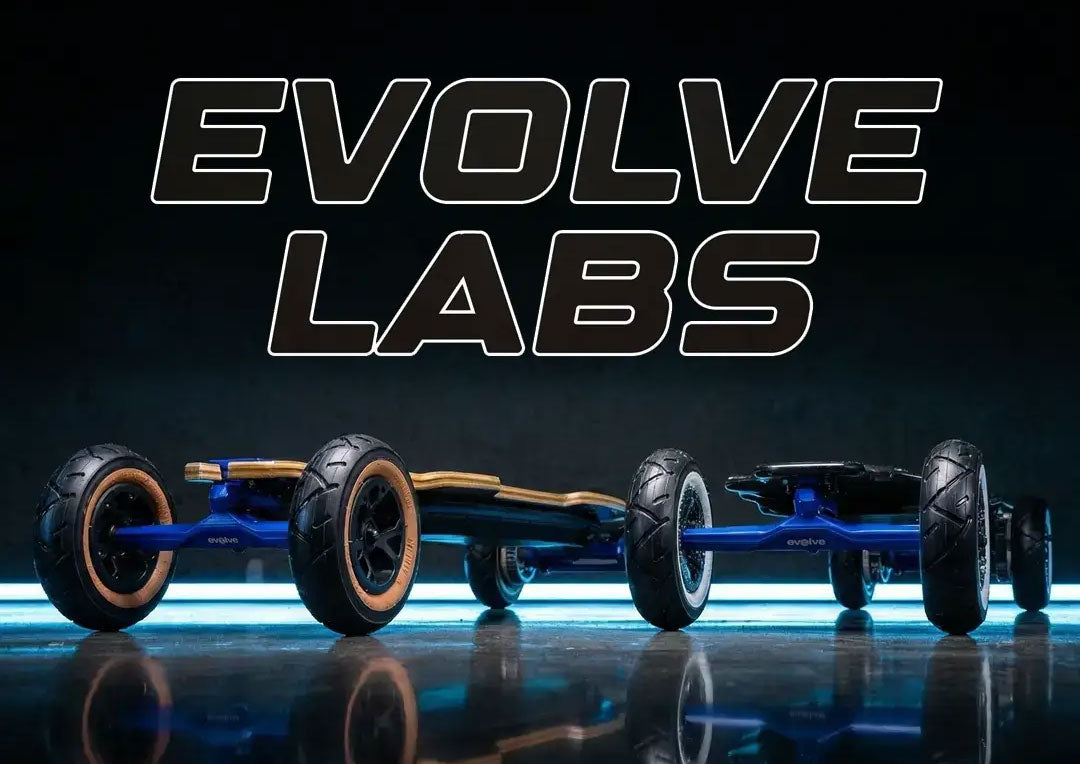
If you want a device that disappears into a backpack, handles real Australian hills without labouring, and turns a boring commute into something you look forward to, an electric skateboard is the better fit. Our bamboo decks suit riders who want a smoother, more forgiving feel underfoot, while our carbon decks suit heavier riders or anyone who wants a stiffer, more planted platform at higher speed. Riders who split their time between sealed paths and rougher ground do well with all-terrain setups, which trade a little top speed and range for genuine versatility.
If your commute is longer, involves less multimodal juggling, or you simply prefer the familiarity of pedalling with assistance, an e-bike like Project BMX is worth serious consideration, particularly for riders who want a natural, bicycle-like feel rather than a stand-on platform.
And if you are drawn to the Onewheel's specific carving feel and are willing to invest real time in learning it, nothing else quite replicates that sensation. It is just not the device to reach for if you need to be reliably competent on day one.
There is no single winner here, and anyone who tells you otherwise is selling something rather than solving your actual commute. Work out what your trip really looks like, weigh it against what each device is genuinely good at, and the right answer tends to be obvious rather than debatable.
-
Posted in
electric skateboard, evolve
