
 (excl. BMX)
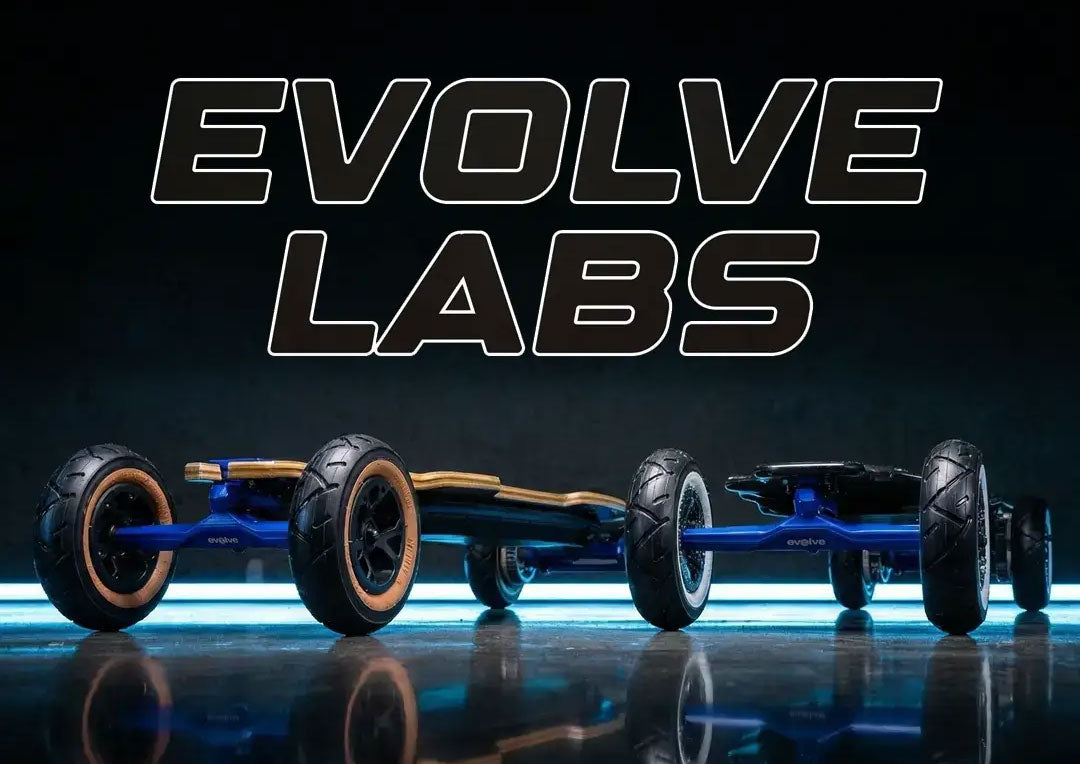
Electric skateboard vs electric scooter: which is better for commuting?

Electric skateboard vs electric scooter for commuting in Australia
For most urban commuters in Australia, an electric skateboard is the better choice because it is lighter, more portable and easier to carry on public transport than an electric scooter. That said, the right answer depends on how far you travel, where you store your ride and what your last-mile journey actually looks like.
Both options have grown significantly in popularity across Australian cities. But they solve the commuting problem in different ways. This article breaks down the real differences so you can make a confident decision.
Portability is where the gap is biggest
An electric skateboard is significantly easier to carry than a scooter when you are not riding it. On a crowded train or tram, a scooter takes up floor space, blocks doorways and draws attention. Most do not fold down to a truly compact size.
A board like the Evolve Stoke X weighs 10.5 kg and fits under a cafe table, tucks beside your desk or slides under a bus seat. You pick it up and carry it like a bag. A scooter, even a folding one, usually needs to be leaned against something and watched.
If your commute involves a train leg in Sydney or a tram in Melbourne, that portability difference is felt every single day.
Riding experience and how it changes your commute
Scooters are upright and static. Skateboards are dynamic, physical and genuinely enjoyable to ride. This sounds like a minor point, but it changes how you feel about commuting entirely.
A scooter puts you in a fixed stance with handles to grip. You steer and brake, but you do not really ride. An electric skateboard involves your whole body. You shift weight to carve, you read the surface ahead, you lean into corners. The ride to work stops feeling like a chore.
The Stoke X is built around this experience. Its shorter 85 cm bamboo deck with natural flex makes it responsive and fun without being twitchy. For newer riders, it is intuitive to learn. For experienced riders, it rewards good technique.
Speed and range for real commutes
The Stoke X reaches a top speed of 42 km/h and offers up to 45 km of real-world range, which covers the vast majority of urban commutes comfortably.
Most Australian commuters travelling by last-mile transport cover somewhere between 3 km and 15 km per leg. The Stoke X handles that with range to spare. Charge time sits at 3.5 to 4 hours, so overnight charging is all you need.
Budget electric scooters in a similar price bracket often cap out at 25 km/h and carry smaller batteries. Premium scooters can match or exceed the Stoke X on range, but they are heavier and less portable as a result.
Hill climbing: a real consideration in Australian cities
With a 35 per cent hill gradient rating and dual 3000W motors, the Stoke X handles the hills you encounter across most Australian city commutes without hesitation.
Sydney riders know that avoiding hills is almost impossible in suburbs like Surry Hills, Glebe or Neutral Bay. In Melbourne, the CBD fringe and inner north throw up consistent gradients. Brisbane's inner suburbs are deceptively hilly. Perth's coastal flat is forgiving, while the Gold Coast's beach-to-hinterland routes can surprise you.
Many entry-level scooters struggle on sustained climbs. The Stoke X does not. The dual motor setup maintains torque and does not bog down when loaded.
Footpath rules and legal context
Regulations around both electric skateboards and electric scooters vary by state in Australia, so it is worth checking your local rules before riding either on public paths.
Electric scooters are increasingly covered by shared hire schemes and specific local council rules. Private electric scooters face restrictions in some states. Electric skateboards sit in a similar grey area depending on jurisdiction.
This article does not constitute legal advice. Always check current state and local regulations for your specific area before riding on roads or footpaths.
Cost and total value
At $1,999 AUD, the Stoke X competes directly with mid-tier electric scooters and offers better long-term value when you factor in build quality, support and repairability.
Cheaper scooters are available, but they often use lower-grade cells, generic controllers and components that are difficult to service. Evolve boards use Samsung 50S cells, a proper EFOC 2.0 motor controller and genuine after-sales support from the Mermaid Waters store in QLD if you ever need hands-on help.
The Stoke X also includes a 12-month warranty and 14-day money-back guarantee, which is not always the case with budget scooter brands.
Key cost comparisons to consider:
- Entry scooters: $400 to $900, lower build quality, shorter lifespan
- Mid-tier scooters: $1,200 to $2,500, heavier, harder to carry
- Stoke X: $1,999, premium components, compact, repairable, supported
Who should choose a scooter instead
A scooter is the better option if you have limited balance confidence, carry heavy loads while riding or need to transport young children.
The upright position and handlebar give scooters a stability advantage for riders who are not comfortable shifting their weight. If you regularly carry a large backpack, camera gear or groceries, the handlebar also gives you something to brace against.
For riders willing to spend a few hours learning to ride, an electric skateboard quickly becomes the more practical and enjoyable tool. For those who want zero learning curve, a scooter is simpler from day one.
People also ask
Is an electric skateboard practical for commuting in Australia?
Yes. The Evolve Stoke X covers up to 45 km per charge, reaches 42 km/h and weighs 10.5 kg, making it well suited to urban commuting. Its compact size means it is easy to carry on public transport and store at work or home.
Can you take an electric skateboard on public transport in Australia?
Policies vary by state and operator. In most cases, a compact board like the Stoke X can be carried on trains, trams and buses as long as it does not cause an obstruction. Always check with your local transit authority before travelling.
Is an electric skateboard harder to learn than a scooter?
Yes, initially. A scooter has handlebars which make balance easier from the start. Most riders become comfortable on the Stoke X within a few sessions, especially in ECO mode where power delivery is more gradual.
Are electric skateboards cheaper to run than scooters?
Running costs for both are minimal since electricity is the primary fuel. The difference comes down to maintenance and repairability. Evolve boards are designed to be serviced and have parts available, which helps with long-term cost of ownership.
What is the best electric skateboard for commuting in Australia?
The Evolve Stoke X is the best commuter option in the Evolve lineup. Its compact deck, 45 km range and sub-11 kg weight make it easy to handle in busy city environments like Sydney, Melbourne and Brisbane.
Does the Stoke X handle hills?
Yes. It is rated for 35 per cent gradients, which covers most hills encountered on typical Australian urban commutes. Dual 3000W motors provide consistent torque on sustained climbs.
Final answer
For commuting in Australia, an electric skateboard beats an electric scooter on portability, ride enjoyment and versatility, and the Evolve Stoke X is the best place to start.
If you travel light, use public transport as part of your commute and want something that is genuinely fun to ride rather than just functional, the Stoke X is the stronger choice. Scooters suit riders who prioritise stability from the outset or carry bulky loads. For everyone else, the board wins.
-
Posted in
electric skateboard, evolve
