
 (excl. BMX)
Cheap vs premium electric skateboards: what you pay for

What you actually pay for when you spend more on an electric skateboard
There is a gap between what cheap electric skateboards look like on paper and what they feel like after three months of regular riding. The specs on a $400 board and a $1,800 board can look surprisingly close to each other. Dual motors, Bluetooth remote, 30-plus kilometre range. So what is really going on?
The answer is not one thing. It is a collection of decisions made at every layer of the build, most of which you will not notice until something goes wrong, or until you ride a board that gets it right.
The parts you see are rarely where corners get cut
Budget boards tend to invest their money where it shows. The deck looks good. The remote feels acceptable. The LED strip catches attention. The cuts happen in the places that are harder to evaluate in a product photo: motor winding quality, battery cell selection, motor controller reliability, and the software that ties it all together.
Motor controllers are a good example. A cheap ESC will deliver power, but it will do so crudely. Throttle response feels on-off rather than graduated. Braking is either too aggressive or too soft, with little feel in between. You adapt to the board rather than the board adapting to you. FOC motor control, which most premium boards use, changes this entirely. It smooths the delivery curve so acceleration and braking feel proportional to your input. That is not a luxury detail. It is the foundation of how confident you feel riding at any speed.
Battery quality is where the real difference lives
A battery figure tells you almost nothing useful on its own. What matters is which cells are inside it, how they are arranged, how the battery management system handles charge and discharge under load, and whether the voltage holds steady when you are climbing a hill or accelerating hard.
Cheap boards frequently use low-grade cells that voltage sag under load. This means the board feels strong when the battery is full and progressively weaker as it drains, because the cells cannot maintain voltage when they are being asked to work. That 30 km range estimate was measured under ideal conditions at a gentle pace. In the real world, with actual hills and actual riders, it shrinks fast.
Samsung 50S cells, which Evolve uses across the current lineup, are a meaningful choice. They hold voltage better under sustained demand and maintain more consistent performance across the full state of charge. This is what makes real-world range figures credible rather than aspirational.
Where the GTR Bamboo sits in this picture
The GTR Bamboo Street occupies an interesting position. At $1,849, it is the most accessible board in the Evolve range. But it is not a budget board in any meaningful sense. It is a proven platform with genuine engineering behind it, and the gap between it and a sub-$500 board is not incremental. It is structural.
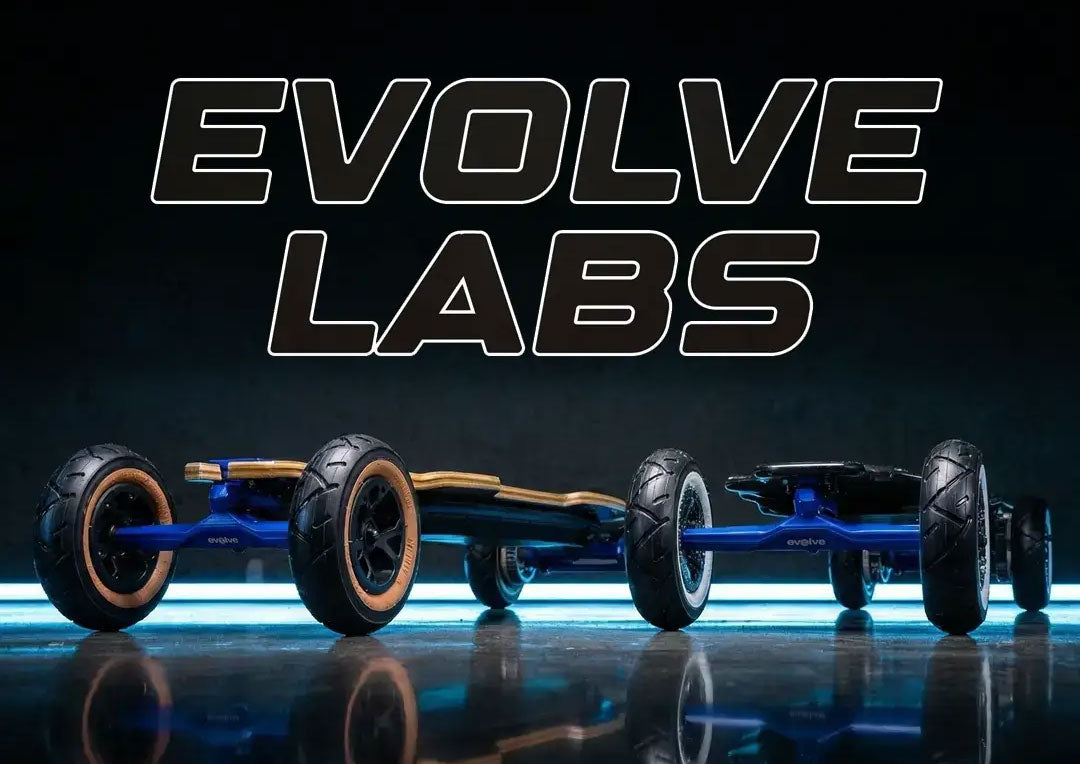
The dual 6368 motors produce 3,000W each. The FOC controller delivers smooth, progressive power. The 504Wh battery gives up to 50 km of real-world range on street wheels, with consistent performance across that range rather than a strong start and a weak finish. The 3-ply bamboo deck with fibreglass laminate gives the ride a natural flex that absorbs road noise and makes carving feel intuitive rather than mechanical.
Hill climbing is rated at 25-plus percent gradients, which covers the steeper residential streets in Sydney's inner suburbs or Melbourne's hillier pockets without breaking a sweat. In Brisbane and the Gold Coast, where the terrain is flatter and sealed paths are long and smooth, you will feel the benefit of a board that rolls efficiently at speed without fighting you for control.
Support, warranty and what happens when things go wrong
This is the part of the cost equation that most comparison articles skip over, and it is arguably where cheap boards fail most dramatically.
When a belt snaps on a budget board, you are often hunting for a replacement from an overseas supplier with no guarantee of fit. When the motor controller throws an error, support might be a slow-response email chain with someone who did not build the board. Parts availability for niche brands drops off fast once the product cycle moves on.
Evolve has a physical presence in Australia, with a store at Mermaid Waters in Queensland and a service team that knows the hardware. The GTR Bamboo carries a 12-month warranty and a 14-day money-back guarantee. Replacement belts, wheels, trucks and battery components are stocked locally. That supply chain matters when you are using the board daily and cannot wait weeks for a repair.
Perth riders who cannot easily visit the Gold Coast store still benefit from a support network and parts availability that simply does not exist at the cheaper end of the market. It is not a small thing.
The cost of ownership over time
A $400 board that needs a new motor controller at month four, replacement cells at month eight, and is eventually abandoned because parts no longer exist, is not cheap. The upfront price is the least accurate measure of what a board will cost you.
The GTR Bamboo's architecture is designed for longevity. Belts are a routine maintenance item, not a failure event. The battery is a known quantity with a predictable lifespan. The riding modes, ECO through SPORT to GTR, give you ways to adjust how hard you push the drivetrain depending on what the session demands, which extends component life without limiting performance when you want it.
Riders who want to spread the cost can use Evolve's instalment options, which make the entry point more accessible without changing what you are actually getting for the money.
When a budget board genuinely makes sense
There are situations where spending less is the right call. If you have never ridden an electric skateboard before and are genuinely unsure whether you will continue, a cheaper board reduces your risk. If the board is a backup or a novelty rather than a daily tool, the calculus changes.
But if you are planning to ride regularly, to commute, to explore paths, to push the board on hills or in varying conditions, then the economics of a premium board become straightforward relatively quickly. The GTR Bamboo is the point in the Evolve range where the quality floor is set. Everything above it is additional performance. But the floor itself is already well above what the budget market offers.
The honest summary is this: cheap electric skateboards are not bad value because they are cheap. They are bad value because the things that make riding feel good, smooth power delivery, consistent braking, reliable range, build quality that holds up, are expensive to do properly. You pay for them whether you choose to or not. The only question is whether you pay upfront or after the fact.
-
Posted in
electric skateboard, evolve
