
 (excl. BMX)
Can electric skateboards handle steep hills?
Can electric skateboards handle steep hills?
Most electric skateboards can handle moderate inclines, but steep hills are a different challenge entirely. Gradient, rider weight, wheel type and motor torque all interact to determine whether your board climbs confidently or struggles halfway up. If you ride somewhere with serious elevation, the board you choose matters more than most people realise.
This is a question that comes up constantly, and the honest answer is: it depends on the board. There is a wide range of capability across the market, and not all boards sold as "powerful" are built to handle sustained steep climbing without overheating, losing traction or braking poorly on the way back down.
What makes a hill hard for an electric skateboard
Gradient is usually measured as a percentage. A 10% grade means 10 metres of elevation for every 100 metres of horizontal distance. A 20% grade is already quite steep. A 30% grade is genuinely challenging on foot.
To climb steep hills reliably, a board needs:
- Enough motor torque to maintain speed under load without stalling
- Sufficient battery voltage that doesn't sag under high current draw
- Effective braking that doesn't overheat on long descents
- Wheels with enough grip to translate torque into movement
Many boards specify a hill rating in their marketing. The important distinction is whether that rating applies under real-world load, with a rider on board, or only in ideal lab conditions. A board rated at 25% climbing might struggle on a sustained real-world grade once rider weight and wheel type are factored in.
Where steep hills are genuinely part of the ride
Sydney riders know this problem well. Suburbs like Balmain, Glebe and Newtown sit on slopes that casual board riders avoid entirely. In Melbourne, inner-north streets around Fitzroy and Carlton occasionally catch riders off guard. Brisbane's inner suburbs, Perth's riverside hills and the hinterland tracks above the Gold Coast all present real elevation challenges that flat-road testing never prepares you for.
If your commute or regular route involves one of these environments, hill capability is not a bonus feature. It is a baseline requirement.
What the Diablo Carbon All Terrain can do
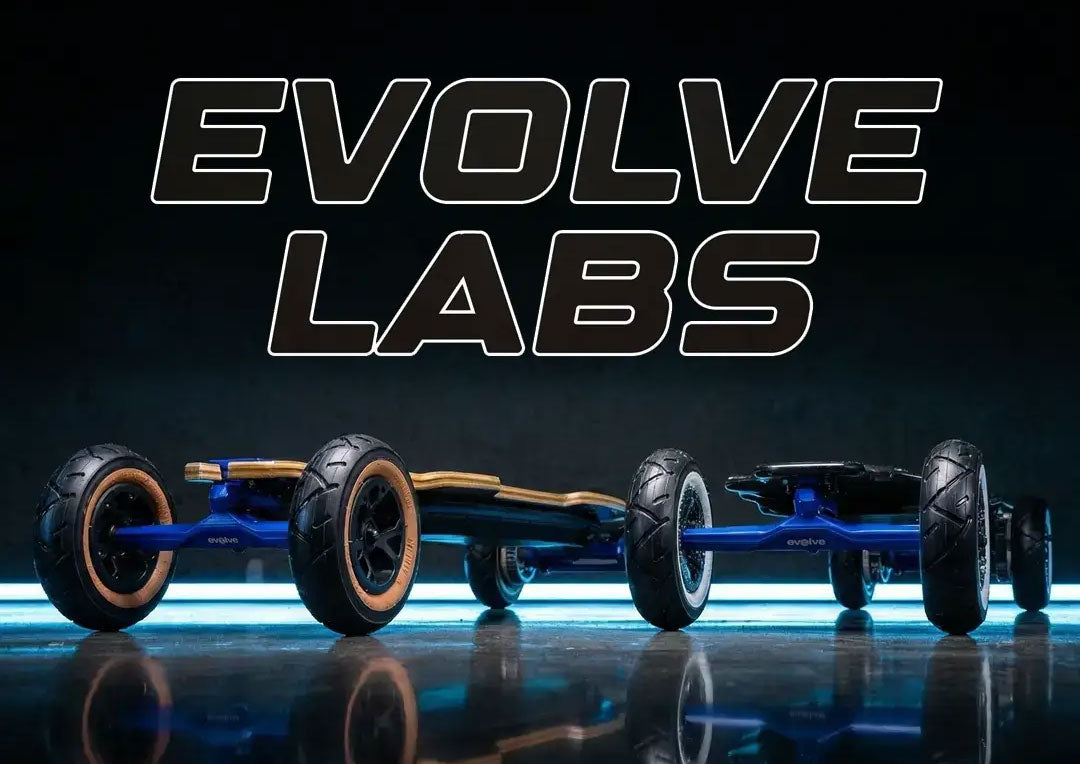
The Diablo Carbon All Terrain is built around the kind of performance that makes steep hills a non-issue rather than a challenge to manage.
It runs dual 6374 motors producing 3,500W each, totalling 7,000W across both drives. The 864Wh Samsung 50S battery holds voltage under sustained load, which matters when you are grinding up a long steep grade rather than a short burst. The result is a 45%+ hill gradient rating that reflects real climbing ability rather than best-case lab figures.
The 175mm pneumatic all-terrain tyres are a significant part of the equation. On loose surfaces, dirt tracks, gravel paths or wet concrete, urethane street wheels lose traction before the motors run out of torque. Pneumatics grip the surface properly, which means more of that 7,000W actually propels you uphill rather than spinning out.
On the way down, the EFOC 2.0 controller manages regenerative braking with enough modulation that steep descents feel controlled. This is one area where cheaper boards often fall short. The braking system matters as much as the climbing ability, and the two need to be matched to the same level of performance.
The carbon deck and why it matters at speed and on rough ground
The deck is forged carbon fibre with an integrated CNC heatsink. Zero flex means the board doesn't sponge under load, which translates to more predictable handling when you are descending fast or navigating uneven surfaces. Heavier riders in particular notice this difference: a bamboo deck with significant flex can feel unstable at the speeds that hills generate.
At 14.35 kg with the all-terrain wheels fitted, the Diablo Carbon AT is not a lightweight board. But on terrain where it earns its keep, that weight is largely invisible. The mass contributes to stability rather than feeling like a burden.
The board supports up to 120 kg rider weight, and at that end of the range the 45% hill rating still holds. That is not always the case with boards that quote gradient figures without specifying the load they were tested at.
Practical setup for mixed terrain with hills
All-terrain tyres are the right choice if your riding involves any combination of hills and imperfect surfaces. The grip advantage over urethane is meaningful on anything other than dry, smooth asphalt.
If your route is exclusively sealed road but includes steep gradients, the Diablo Carbon is also available in a 2-in-1 configuration that includes both wheel sets. That gives you the option to run street wheels for pure commuting and switch to pneumatics when the terrain calls for it.
For ride modes, starting in a lower power setting on unfamiliar hills is worth considering. Once you understand the gradient and your board's response, moving to a higher mode gives you the full torque and braking performance on demand.
What to look for when comparing boards on hill capability
A few things to check before taking any hill gradient claim at face value:
- Is the gradient figure tested with a rider, and at what weight?
- Does the board's braking system match its climbing capability?
- What happens to range when climbing is a major part of the route?
- Are the wheels suited to the surface where the hills exist?
The Diablo Carbon AT answers each of these clearly. The 864Wh battery reduces the range hit from sustained climbing. The braking is built to the same performance tier as the motors. The pneumatic tyres handle whatever surface the hill sits on.
If you want to ride the Diablo Carbon AT before buying, it is available to try at the Evolve store in Mermaid Waters, QLD.
The short answer
If your riding involves steep hills, you need a board that was designed for them, not one that tolerates them on a good day. The Diablo Carbon All Terrain has the motor output, battery capacity, braking system and wheel type to make steep gradients a consistent and controlled part of your ride rather than the limiting factor in where you can go.
-
Posted in
electric skateboard, evolve
