
 (excl. BMX)
Best electric skateboard for last-mile commuting

The last-mile problem, and why most riders are solving it wrong
Most people searching for a last-mile commuting board are thinking about the wrong variable. They obsess over top speed or range figures, when the real question is: what does the journey actually look like? A 3 km ride from a train station through Sydney's CBD is not the same as a 6 km stretch along a sealed path in Perth. One involves tight footpaths, curb drops and pedestrian traffic. The other might let you open the board up properly. The right setup depends entirely on your specific last mile, not on a spec sheet.
That distinction matters because it changes which board makes sense. A dedicated street board is faster and lighter, but the moment your commute crosses a gravel car park or a rough service road, you are fighting the board rather than riding it. A dedicated all-terrain board handles everything, but it is heavier and slower on sealed surfaces where you spend most of your time. The obvious answer to that is a board that does both, but most two-in-one setups feel like a compromise. The Fusion 2-in-1 does not.
What last-mile commuting actually demands from a board
Think about the full picture of a commute. You are probably carrying a bag. You are starting and stopping more than you would on a recreational ride. There are surfaces you cannot always predict, and you need to be confident on hills if your city has them. You also need the board to be manageable when you are not riding it, because folding it into a train carriage or tucking it under a desk is part of the deal.
Range matters less than most people think for true last-mile use. If your ride is 4 to 8 km each way, almost any modern board covers it without stress. What matters more is how the board handles at low speed, how responsive the braking is in a crowd, and whether the wheel setup gives you enough grip and comfort to arrive feeling like a rider rather than a survivor.
Weight is where things get real. A 15 kg board feels fine when you are riding it. Carrying it up a staircase or through a busy station is a different story. The Fusion sits at 12.5 kg, which is noticeably lighter than the Diablo range. Over a full week of commuting, that difference accumulates.
Why the 2-in-1 configuration earns its place
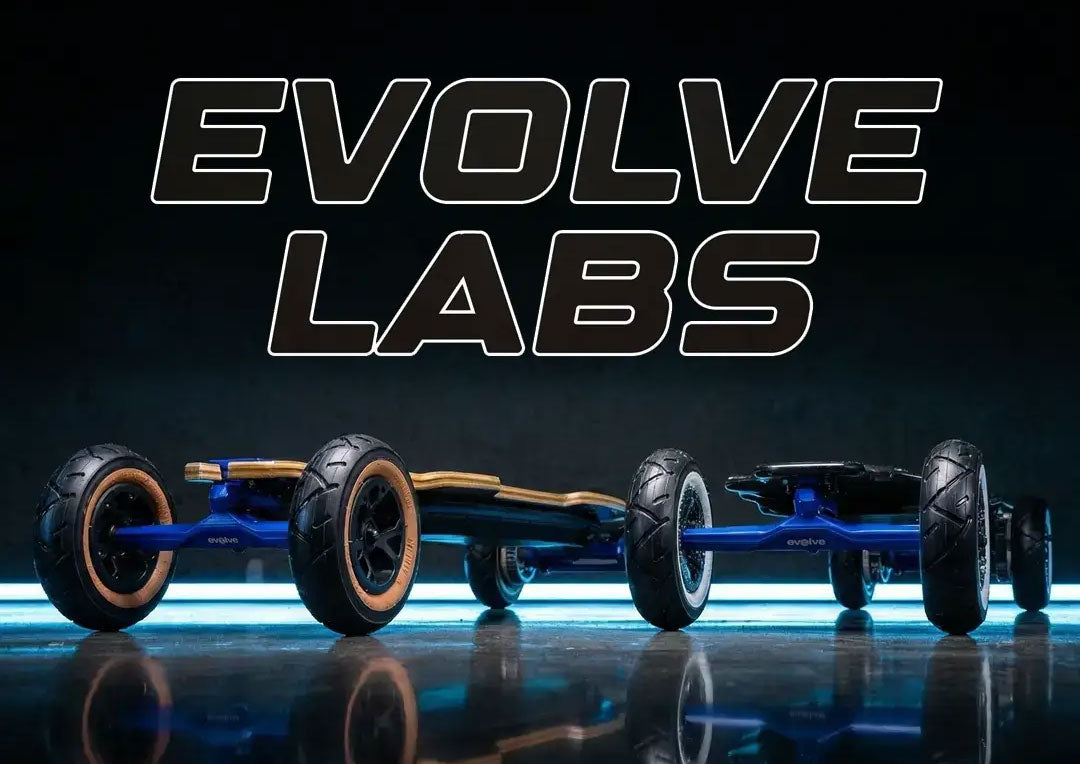
The core argument for the Fusion 2-in-1 is simple: your commute probably does not stay on one surface type, and even if it does today, it might not tomorrow. Street wheels on the Fusion deliver up to 60 km of range at up to 50 km/h, which is serious performance for sealed paths and roads. Swap to the 175mm pneumatic all-terrain tyres and the range drops to around 40 km, but you get the kind of ride quality that absorbs rough ground and gives you real confidence on mixed surfaces.
In Melbourne, where tram tracks and uneven bluestone lanes are facts of life, having that option to run a slightly more forgiving wheel setup is not a luxury. In Brisbane, where riverside paths can turn into compacted gravel trails, the same logic applies. The board does not force you to choose a single terrain profile and commit to it permanently.
Swapping between wheel sets takes some time and a basic tool, so this is not something you would do mid-commute. But for riders whose route changes depending on the week, or who want to ride recreationally on weekends and commute during the week, carrying both setups is genuinely practical. The 2-in-1 box includes everything you need.
Power that makes sense in the city
The Fusion runs dual 3000W motors through Evolve's EFOC 2.0 controller. On paper that sounds like more than a commuter needs. In practice, it means the board responds precisely at low speed, where you actually spend most of your urban riding time. Smooth, controlled acceleration in ECO or SPORT mode feels very different from the lurchy low-end response you get from underpowered boards trying to handle a hill with a heavy rider.
Hill climbing is rated at 35% gradient. In Sydney, where some station exits drop you straight onto a steep residential climb, that capability means you are not walking any section of the route. The braking is equally controlled, which matters when a pedestrian steps off the kerb without looking.
The Phaze remote gives you dual-trigger control, throttle and brake handled separately, with a clear LCD display. For commuting in traffic and around people, that separation of function is genuinely better than single-trigger designs.
Living with the board outside of the ride
The Fusion's 96 cm bamboo deck gives you comfortable foot space without the bulk of the longer Diablo platform. The bamboo construction provides natural flex, which softens the ride on imperfect surfaces and makes the board more forgiving if your technique is still developing. It also means the deck absorbs some of what the wheels do not, which you notice on longer rides.
Front and rear LED lights are built in and customisable through the Explore app. For early morning or evening commutes, having reliable lighting on the board rather than relying on a separate clip-on is one less thing to forget or charge. The app also gives you access to ride tracking and diagnostics, which is useful for understanding real-world range on your specific route.
If you are based in Queensland and want to see the board in person before committing, Evolve's physical store is at Mermaid Waters on the Gold Coast. For riders in Perth, Sydney, Melbourne and Brisbane, ordering online is the practical route, and the Evolve support team is accessible if you have questions about setup or configuration before you buy.
Who should look at something else
If your commute is genuinely short, under 3 km on smooth sealed ground, and portability is your primary concern, the Stoke X is lighter, cheaper and easier to carry. It is a strong board for campus-style last-mile use where you are moving between buildings or covering short urban hops.
If your route is almost entirely off-road or involves rough trails rather than mixed urban terrain, the Renegade Diablo is a different tool with a different purpose. The Fusion's all-terrain capability is real, but it is designed for mixed conditions rather than dedicated trail riding.
For most riders whose last mile is a combination of footpaths, bike lanes, occasional rough patches and the odd hill, the Fusion 2-in-1 covers the brief better than anything else in the lineup. It is not the cheapest option, but the cost-per-ride calculation looks different when you are actually replacing a transport habit rather than adding a recreational toy.
The best commuting board is the one that removes friction from your day. Every morning you choose to ride instead of waiting for a bus or paying for parking is the board doing its job. The Fusion 2-in-1 makes that choice easier to justify, and easier to stick with.
-
Posted in
electric skateboard, evolve
