
 (excl. BMX)
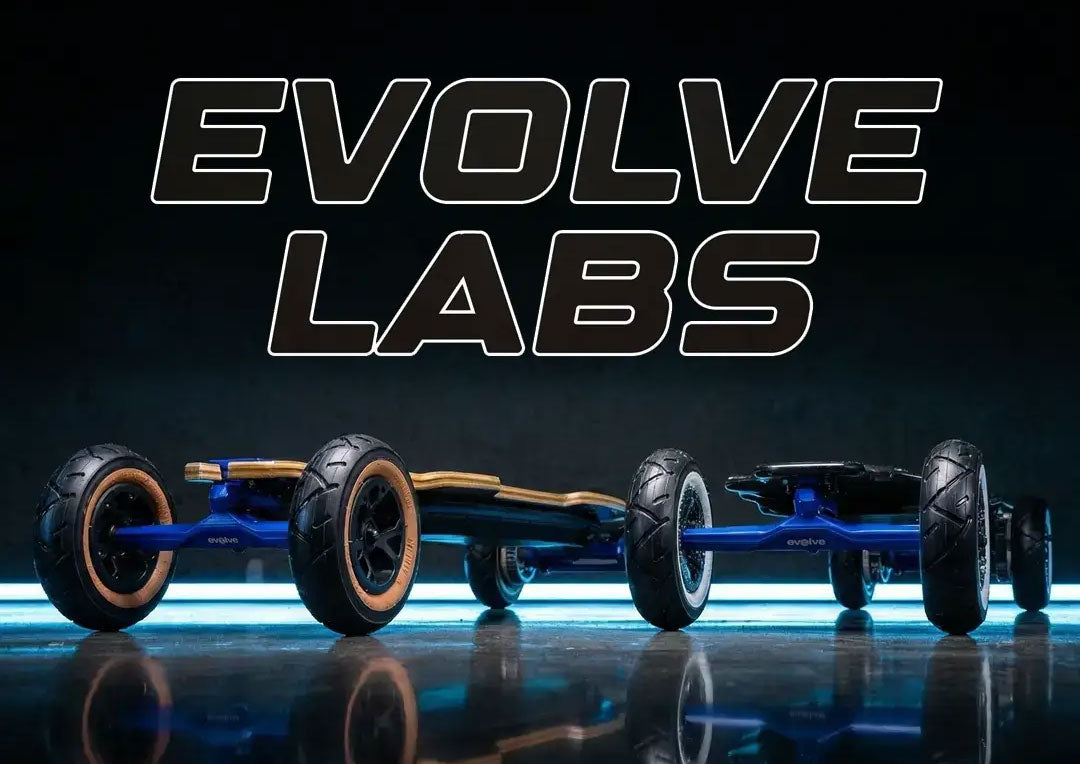
Belt drive vs hub drive electric skateboards explained
Belt drive vs hub drive electric skateboards: what actually matters for your ride
Most people researching electric skateboards spend a lot of time comparing speed figures and range numbers. Fewer stop to ask how the drivetrain actually works, and whether it matters. It does. The difference between belt drive and hub drive is not just mechanical trivia. It changes how the board feels underfoot, how it handles hills, and what happens when something eventually wears out.
If you are trying to decide between the two, here is what you actually need to know.
The basics of how each system works
A hub drive motor sits inside the wheel itself. The motor and the wheel are essentially one unit. When you accelerate, the motor directly spins the wheel from within. It is a compact, clean-looking setup with fewer external parts.
A belt drive system separates the motor from the wheel. The motor mounts to the truck, and a toothed belt connects the motor pulley to a drive gear on the wheel. When you accelerate, the motor turns the belt, which turns the wheel. There is more going on mechanically, but that complexity is precisely where the advantages come from.
Why belt drive wins on hills
Hub drive motors are limited by the physical size of the wheel they sit inside. A larger motor means a larger wheel, which creates compromises in deck height and ride feel. Because of this constraint, hub drive motors tend to be smaller and produce less torque.
Belt drive systems do not have this problem. The motor lives separately and can be sized for genuine performance. The belt and gear ratio then multiply that torque before it reaches the wheel. On a board like the Diablo Bamboo, this translates to a 45 per cent hill gradient capability. That is not a number that polishes up nicely in a spec sheet. It is the reason the board does not hesitate on the kind of inclines you encounter riding through Sydney's inner suburbs, Melbourne's Fitzroy, or Brisbane's hilly western corridors.
Hub drive boards can handle moderate gradients, but they tend to lose speed and generate significant heat on sustained climbs. The motor has nowhere for that heat to go when it is buried inside the wheel.
Braking is part of this conversation too
Regenerative braking works through the same drivetrain in reverse. When you brake, the motor resists rotation and recovers a small amount of energy back to the battery. On hub drives, the braking feel is often described as soft or inconsistent, particularly at lower speeds, because the motor cannot apply strong resistance through direct contact with the road.
On a belt drive board, the gear ratio that amplifies torque during acceleration also amplifies braking force. The result is progressive, controllable deceleration. On the Diablo Bamboo, the EFOC 2.0 controller manages this precisely, so you can ride confidently on a steep descent in Gold Coast's hinterland or navigate the gradual slopes of Perth's coastal paths without the braking feeling binary or unpredictable.
What wheels actually feel like
This is where hub drive systems have a genuine limitation that rarely gets mentioned honestly. Because the motor is inside the wheel, there is almost no urethane between the road and the motor housing. You ride on a very thin layer of rubber. On rough asphalt or brick paths, every surface imperfection transmits directly through the board.
Belt drive boards use standard urethane wheels mounted separately from the motor. You can run 97mm wheels, larger 107mm wheels, or even switch to pneumatic all-terrain tyres. The wheel absorbs road vibration the way a wheel is supposed to. When you are riding a long stretch of sealed path in Melbourne or covering the beachside paths around Mermaid Waters, that difference in ride quality is not subtle.
The other practical advantage is replaceability. Worn out a set of street wheels? Swap them. Want a different durometer for a carvier feel? Change them. On a hub drive board, the wheel and motor are the same unit. Replacing worn urethane often means replacing the entire motor assembly, at a cost that erases any initial price saving.
The case for the Diablo Bamboo Street
The Diablo Bamboo Street is the clearest argument for why belt drive matters in a real-world setup. The dual 6374 motors produce 3,500W each, which is a meaningful step up from what smaller hub motors can deliver. The 864Wh Samsung 50S battery supports up to 80 km of real-world range on street wheels, and the EFOC 2.0 controller keeps power delivery smooth whether you are cruising at 25 km/h or pushing close to the governed 50 km/h top speed.
The bamboo and fibreglass deck gives the board a natural flex that absorbs road buzz without being soft underfoot. It is a surfy feel, the kind that makes longer rides genuinely enjoyable rather than something you endure for the commute savings. SuperCarve 2.0 trucks sit underneath, forged and CNC machined, and the 97mm custom urethane wheels roll quietly over the kind of mixed asphalt you encounter on any Australian street.
At 14.1 kg it is not a featherweight, but the weight is distributed in a way that feels stable rather than cumbersome. The Phaze remote gives you precise throttle and brake control, and the Evolve Explore app lets you track consumption and tune ride modes to match your style.
One honest note: the Diablo Bamboo is a street-specific setup. If you regularly ride dirt paths, grass or gravel, the Diablo Bamboo 2-in-1 includes both street and all-terrain wheel sets and covers both environments without compromise.
Maintenance: the honest trade-off
Belt drive boards do require more attention than hub drive boards. Belts wear down over time and need occasional replacement. Drive gears can wear if they are not kept clean. These are not expensive fixes, but they are something you need to stay across.
The flip side is that when something wears on a belt drive board, you replace the belt. When something wears on a hub drive board, you replace the motor. For riders doing significant weekly distance through Sydney or commuting daily in Brisbane, the long-term cost picture favours belt drive by a reasonable margin. Components are accessible, labour is straightforward, and the Evolve service team at Mermaid Waters handles it if you would rather not do it yourself.
Which drivetrain makes sense for most riders
Hub drive boards make sense if you want minimal maintenance, a clean aesthetic and you ride mostly flat, smooth ground at moderate speeds. They are a reasonable choice for light use.
Belt drive is the right choice if you want real torque, strong braking, the ability to swap wheels between surfaces, and a ride quality that actually improves the longer you are on the board. For most Australian riders covering real terrain, dealing with real hills, and expecting a board to last several years of regular use, belt drive is not just better. It is the sensible choice.
The Diablo Bamboo Street is what that looks like when the engineering is done properly. If you are going to spend serious money on an electric skateboard, spend it on a drivetrain that earns its keep every time you ride.
-
Posted in
electric skateboard, evolve
